Showing posts with label Earthquake preparedness. Show all posts

Oct 9, 2017

Quick, Easy, and Cheap Emergency Preparedness

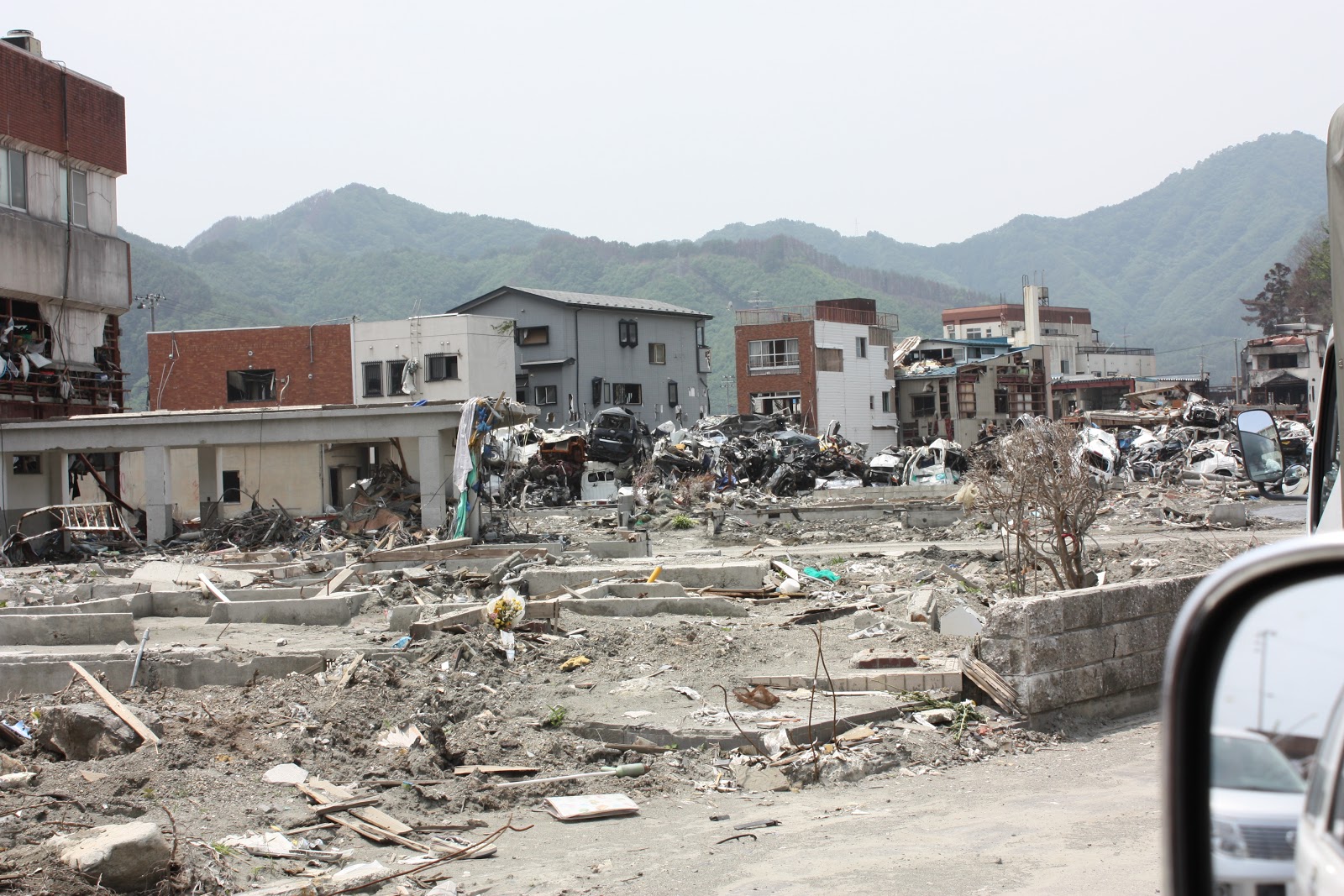
The multiple natural disasters happening near and far have me, as usual, thinking back to our time in Japan after the 3/11/11 Tohoku Earthquake/Tsunami/Nuclear Meltdown.
I still remember a week or two after it happened, I logged in to Facebook one day to send out an update and there was the rest of the world: blithely going about their lives. It was a very odd when we felt like we were living in a nightmare.

I remember in the weeks and months after the quake, we would be talking about our experiences, mention preparedness or 72 hour kits, and our friends and family would nonchalantly (or sheepishly) mention "Yeah, I guess I should get something just in case..."

I kept thinking "WHAT IS WRONG WITH YOU?!? THE BAD STUFF DOESN'T JUST HAPPEN OVER-SEAS! WHAT ABOUT KATRINA? BAD STUFF CAN HAPPEN ANYWHERE!!!"

(Sometimes I get a little vehement. Usually I keep said vehemence to myself. The rest of the time, I blog about it or yell it at bad drivers.)

I feel incredibly heart sick for those affected by natural disasters, (AND man-made disasters like Vegas). Heart sick and anxious and fearful and helpless. But those feelings don't help anyone. Talking about those feelings on-line probably won't help anyone. But maybe writing about preparedness WILL help someone. I don't really wanna be a preparedness blogger. But here we all are.

We can't prepare for everything. We can't prevent all bad things from happening. But we can take some basic steps to bring a little peace into our lives.

I know "Emergency Preparedness" can be daunting. To some it just seems like an overwhelming chore.
Some don't want to spend a lot of money and try to DIY it. 
After all, you might think, "I just need to print a list from Pinterest, take it to two or three stores, buy every supply on the list {times number of family members,} take items home, assemble in appropriate carrying aparatus, and then find a place to store it all!"
I'm here to tell you it does not need to be that hard.

Here's the deal though: It does cost a little money. But you can get a good start for around $40-$50.

Maybe you are completely broke. Maybe buying one or two emergency supplies is your only option. If that's the case, you can make it work. Get a list, and get a few things when you can afford them. (Start with a case of bottled water, next add emergency food bars, and go from there.) THAT IS BETTER THAN NOTHING!


(Also, tell your parents that you would LOVE a 72-hour kit for Christmas. They might just be THRILLED to hook you up!)

For the rest of you, please listen closely to my words:
Think about your budget. Think about the things you spend money on every single month. Think about some of the things you buy that are WANTS and not absolute needs.
 Most of us have SOMETHING in our budget that isn't strictly  necessary to keep us alive. Most of us have SOMETHING we can sacrifice for a good cause. THIS IS THAT CAUSE.

In case you're wondering, I speak from experience. We purchased our 2-Backpack-72-hour-kit-for-Four-People when we were broke and living on student loans during UCSF Dental School. Our expenses (living in San Francisco) were high, and our budget was tiny. But we were counseled by church leaders to be prepared. 
We immediately bought what we needed and started saving a little cash to keep on hand. I had those same emergency 72-hour kits a few years later on 3/11/11, and a tiny "can" safe full of $800/cash we had slowly saved over time.

{With the power out, and ATM's, cash registers and credit card machines not working, guess what I used to buy extra diapers with after the quake? Cash from my tiny safe.}

So here's my advice, once you've determined that you're going to skip dinner out for a few weeks, and turn off your cable for a month, or disconnect your ungrateful teens cell coverage for three months, (just to keep them humble), you can start the lengthy, tedious, difficult process to becoming prepared.

First, get on-line
Second, buy a pre-made 72-hour kit. 

That's it.

I just looked on Amazon. They have a 72-hour-kit for FOUR people on-sale for $139.95. That is actually pretty darn cheap. If that is still too rich for your blood, get a one person kit for around $50. (I picked one up at Home Depot once for around $35!)
A ONE person 72-hour kit could also be a THREE person 24-hour kit. In other words, it's better than nothing.
Look at Amazon, Costco.com, BePrepared.com, or any other site of your choice. Give yourself 30-40 minutes to shop around and find the best bargain, and THEN JUST BUY ONE!!!

(You just might be so proud of yourself that next month you go back and buy another one!)

It doesn't actually have to be a long painful process. I ain't got time for that. YOU ain't got time for that.

Even IF you want to DIY it, I STILL recommend buying your first fully assembled kit. Here's why: you will instantly have a whole bunch of emergency stuff.
All at once.
All in one place.
All packed neatly.
All well thought out.
You will immediately feel a little better at the thought that you are not COMPLETELY unprepared for a disaster.

After that, you can TOTALLY bargain shop and add to it until it meets the needs of your entire family.

If you do want to outfit your family all at once, don't buy individual one-person packs or a lot of the items will be needlessly duplicated. If you can afford it, buy a pack built for 2 or 4.
That way, you aren't paying for 4 emergency hand crank radios but you're still getting 4 emergency whistles and rain coats and the right amount of food and water.

It's been a few years since Doug and I have made any significant updates to our stock of survival gear, and it's been at least a year since we rotated the food and clothes in our 72-hour-kits. (The food bricks last a long time, the snack-y stuff needs to be rotated.)

But we are now to the point we have everything we need and plenty of luxury items.
Some of those "luxury" items aren't all that fancy, like:
Snack food and candy in addition to emergency protein bars.
Mountain Home just-add-water meals
*Card games and small toys and comfort items for kids
A spare set of clothes for each person
Plus a few high tech gadgets like a solar phone charger

If we have to shelter in place, we can survive with enough food and water for a loooong time. If we have to evacuate, we have enough food and shelter and water and warmth for 72 hours for all seven of us. We didn't buy everything all at once. But we started with a basic kit for the four (at the time) members of our family, and built from there.

I KNOW this is not what most people want to spend money on--something you will stick in a closet and may never need. But I am here to tell you that preparedness FEELS GOOD! It alleviates stress and anxiety! It is calming! It is proactive! And it is something we can all accomplish if we want to!!

Please search the archives if you want posts written by me and by my friends on what we had and what we wished we had had in our preparedness supplies in the aftermath of the Tohoku quake. (Search for Preparedness or Misawa Monday Preparedness Perspective.)
And please ask if you have any questions. I'm happy to help!

Haven't got a single thing yet except a full HydroFlask by the kitchen sink?? 
Let me know when you've successfully hit the "Buy Now" button on your first 72-hour kit. I'll be here cheering for you. 
Somewhere in the middle? 
What are you still missing?
If you are already completely prepared, tell me where you got your stuff and what you are super happy to have!

Remember: "If ye are prepared, ye shall not fear."

Sincerely,

Emily


*From my friend Kellie in Houston:
We didn't need to evacuate but were stuck at home for multiple days in a row with 7 kids... separate from the 72 hour kits, have a rubbermaid filled with glow sticks, Play-doh, a few new games or craft items.  I thought about it and purchased a few days before the storm hit and I am soooo glad I did, seriously saved our week.  I am now thinking about setting aside a permanent "emergency fun kit"

SHE WAS PREPARED!!! It was a rotten situation but I can guarantee her preparedness made it easier! Great job Kellie!!

Why I'm passionate about preparedness: Surviving the Earthquake in Japan

We have every reason to be optimistic in this world. Tragedy is around, yes. Problems everywhere, yes. But … you can’t, you don’t, build out of pessimism or cynicism. You look with optimism, work with faith, and things happen.
— Gordon B. Hinckley

Dec 22, 2012

A Little Reminder from Sandy

Got this via e-mail today.  Brought back some painful memories and reminded me that I am not 100% prepared for a disaster.  (Especially if it lasts for more than a few days.)  Even after what we've lived through in Japan!  Here we are on an earthquake-prone coast again and there are still some things we really need to add to our Emergency Preparedness stash!  (First off, more fuel and propane!)

Also made me feel very grateful our power was on (though very limited) after a few days.  How horrible to think of my kids being cold longer than they were.  (So happy our current home has a wood burning fireplace!)

Anyway, this was just the reminder I needed to re-double my Emergency Preparedness efforts!
We've ordered quite a bit from www.BePrepared.com if you're looking for a place to start!

Sorry for the funky formatting--this came as an e-mail forward and I don't know the authors name or the source!  (Thanks Steph D.!)


Things that I learned from Hurricane Sandy


1. The excitement and coolness wears off around Day Three
 2. You are never really prepared to go weeks without power, heat, water etc. Never!
 3. Yes it can happen to you.
 4. Just because your generator runs like a top, does not mean its producing electricity.
 5. If you do not have water stored up you are in trouble.      a. A couple of cases of bottled water is NOT water storage
 6. Should have as much fuel as water
     a. Propane
     b. Gas
     c. Kerosene
     d. Firewood
     e. Firestarter, (kindling, paper, etc)
 7. Even the smallest little thing that you get from the store should be stocked up.. (spark plug for the generator, BBQ lighter, etc)
 8. If you are not working, chances are nobody else is either.
 9. I was surprised how quickly normal social behavior goes out the window. I am not talking about someone cutting in line at the grocery store.
    a. 3 people were killed at gas stations within 50 miles of my home.
    b. I did not say 3 fights broke out, 3 people were killed.
 10. Cash is king (all the money in your savings means nothing)
 11. Stored water can taste nasty.
 12. You eat a lot more food when you are cold
 13. You need more food than you think if your kids are out of school for 2 weeks
 14. Kids do not like washing their faces in cold water.
 15. Your 1972 honda civic gets to the grocery store as well as your 2012 Escalade… but the Honda allows money left over for heat, food, water, a generator, fire wood, a backup water pump, you get the idea..
 16. The electrical grid is way more fragile than I thought.
 17. Think of the things that are your comfort, your escape: a cup of hot chocolate, a glass of milk and a ding dong before bed, etc. Stock up on those too. You will need that comfort after Day Three.
 18. You quickly become the guy in the neighborhood who knows how to wire a generator to the electrical panel, directly wire the furnace to a small generator, or get the well pump up and running on inverter power 
                                                    OR 
                    you are the guy whose master’s degree in accounting suddenly means nothing. 
 19. A woman who can cook a fine meal by candle light over the BBQ or open fire is worth her weight in gold. And women, whose weight in gold, would not add up to much, usually die off first. Sorry skinny women.
 20. It takes a lot of firewood to keep a fire going all day and into the evening for heat.
 21. All the food storage in the world means nothing if your kids won’t eat it.
 22. You might be prepared to take care of your children and their needs, but what about when the neighborhood children start to show up at your door?
 23. Some people shut down in an emergency. There is nothing that you can do about that.
 24. Your town, no matter how small is entirely dependent on outside sources of everything.
              a. If supply trucks stop rolling in due to road damage, gas shortages or anything else you could be without for a long time.
 25. In an emergency men stock up on food, women stock up on toilet paper.
 26. I was surprised how many things run on electricity!
 27. You can never have enough matches.
 28. Although neighbors can be a great resource, they can also be a huge drain on your emergency storage. You need to know how you are going to handle that. It is really easy to be Bob the guy who shares on Day Three . . . not so easy on Day 11. Just reality.
 29. Give a man a fish he eats for that day, teach a man to fish and he will never be hungry again.. Now I get it.
 30. All of the expensive clothes in the closet mean nothing if they don’t keep you warm.
 31. Same goes for shoes… (Love you Honey!!!!)
 32. You cannot believe the utility companies. They are run by politicians!! Or so it seems,
 33. Anything that you depend on someone else for is not available anymore.
 34. Quote “A man with a chainsaw who knows how to use it is a thing of beauty”
 35. Most folks don’t have any emergency storage. They run to Wal-Mart and get water and batteries and then fill their tubs with water. That's it. A lucky few will get a case of ramen and a box of PopTarts. That will be your neighbors' supply. (especially if you live outside of Utah)
 36. Fathers, all the money you have ever made means nothing if you can’t keep your kids warm.
 37. Mothers, everything you have ever done for your kids is forgotten if your kids are hungry.
 38. You really do not want to be unprepared parents -- the kids turn on you pretty quick.
 39. Small solar charging gadgets will keep you in touch. Most work pretty well it seems.
 40. Most things don’t take much power to operate.
      a. Computers,
      b. Phones
      c. Radios
      d. TV
      e. lights

 41. Some things take a ton of power to operate.
      a. Fridge
      b. Toaster
      c. Freezer
      d. Hot plate
      e. Microwave

 42. When it gets dark at 4:30pm the nights are really long without power.

 43. Getting out of the house is very important. Even if it is cold. Make you
r home the semi warm place to come home to.. not the cold prison that you are stuck in.

 44. Someone in your family must play or learn to play guitar.

 45. Things that disappeared never to be seen again for a very long time.
      a. Fuel, of all kinds
      b. Matches, lighters of any kind etc.
      c. Toilet paper
      d. Paper plates, plastic forks and knives
      e. Batteries, didn’t really see a need for them. (flashlights??? I guess)
      f. Milk
      g. Charcoal
      h. Spark plugs (generators)
      i. 2 stroke motor oil, (chainsaws)
      j. Anything that could be used to wire a generator to the house.
      k. Extension cords
      l. Medicines (Tylenol, advil, cold medicine etc)

 46. There was a strange peace to knowing all I had to do each day was keep my family safe, warm, and fed, but my peace was someone else’s panic.

 There were also many things that were not learned from hurricane Sandy, but reinforced. Those things were the importance of my family and their love and support, especially my lovely wife, that my Heavenly Father really is in charge, period, and finally that I am very thankful for the upbringing and experiences that have taught me and brought me to where I am .. Wherever that is…
God Bless!!!

Mar 10, 2012

One Year Later

In just a year, most of the fear from that day has faded.  But watching something like this brings it all back in an instant.

This one is pretty long.  Something to watch as a family tonight perhaps?  (After little kids are in bed.)


This one is pretty fascinating.  For all those people who tell me "California has earthquakes too!"
Yep.  I know.

Skip to about 1:45 if you're short of time

The first time I saw this (second movie) I started feeling sick as the days clicked past.  And then the explosion on March 11th was like being punched in the stomach.

I don't think most people in the states comprehended that the earthquakes never stopped.  And with the constant reminders, it's hard to get the fear out of your head and heart.  I never felt completely at ease until I left Japan.  Which was a sad way to leave a place we all loved so much.
The stress decreased over time, but those constant little earthquakes were constant little reminders.  (Some not so little.)  My friends there are still living with them.

The thing is, we wouldn't have traded our time there for anything.  Although the earthquake was a low point, the great things that started happening after were amazing high points.  It was a great experience to be part of the clean-up.  To see the amazing pride and grace and resilience of the Japanese people.  To see destruction repaired.  To see things rebuilt.  To see the outpouring of love from other countries including America.  It was great to be a part of that.

We will always love Japan!


Looking Back:

First post post-quake:  surviving-earthquake-in-japan.html
Aftermath:  earthquake-aftermath.html
Mormon's go to work:  humanitarian-aid-for-hachinohe.html
Sharing hugs from America:  american-refugees-from-sendai.html
Frustration:  sigh.html
One Week Anniversary:  should-i-stay-or-should-i-go-now.html
Feeding the French:  feeding-french-rescue-workers.html
Cleaning Up!:  cleaning-up-mess.html
Perspective:  an-american-mom-in-japan/
Emergency Preparedness:  preparing-to-be-prepared.html
Short Video by Me:  more-ways-to-help.html
Doug cleaning up in Noda:  operation-tomadachi-noda.html
First Preparedness Post by Janeen:  misawa-monday-paeparedness-perspective.html

Thanks for remembering with me!
:)

Jun 24, 2011

100 Days Post Quake

Hi Friends,
Thought I'd pass this along.  Anna is one of my former pottery students.  I asked her if I could publish this here.  She's just started a blog.  Check it out after you read the following!  Everything below is property of Anna!


Hello,
My name is Anna Kenkel.  I am a US Air Force Reserve Officer, a high school history teacher, an Air Force Wife and mother to a baby girl.  I have the priviledge of living in Misawa, Japan, which was impacted by the March 11th 9.0 earthquake and tsunami.  Our town has recovered, but many communities very close to us are still suffering.

               We woke up this morning to yet another big earthquake – a 6.7 about 50 miles from us.  I’m not sure how many we have had up to this point, I only know we surpassed 1,000 months ago.  I then find out that 6 people died from the shock of another earthquake.  6 people whose shelter I visited just hours prior.  Did I meet these people?  Did my presence help them in any way in the last hours of their lives?  I will never know.  Even with these frequent reminders of the tragedy that changed the lives of Japanese just over 100 days ago, I have become ignorant in the preceding months to the suffering that is still occurring just 100 miles south of us.  Yesterday, I had an incredible opportunity to wake up to reality by seeing the devastation and desperation that is occurring as you read this note.  I am still trying to process everything I witnessed.  I am physically and emotionally drained from this trip.  I would like to share my experiences in hopes that you may be called to act in some small or big way and don’t become blind to needs of those who still suffer.
               It took us a long time to get to Otsuchi, Iwate Prefecure mostly because it is ruggedly remote.  You have to take windy, often one-laned mountain passes to reach this area of Japan.  I can only imagine how this has hampered recovery efforts.  Finally, after nearly 4 months, debris blocking the roads has made this area accessible.  I was first struck by the beauty of this area.  You are admiring the green covered mountains and then, like a slap in the face it appears:  absolute devastation.  My first thought was this must be what a war zone looks like.  Yet, as I got closer and deeper into the destruction, I thought this must look more similar to Hiroshima, August 6, 1945.
               As we drive through the streets of Otsuchi, there are very few structures still standing.  Those that remain are either burned out shells of their former selves or mangled pieces of concrete and steel.  Beyond that is just dust and debris.  Every inch of this city is covered in silt, dirt, twisted metal, missing shoes, warped parts of cars, torn sweaters, broken pieces of homes and perfectly preserved photo albums of lost loved ones.  We pull into the parking lot of the former city hall.  A hollow building with a giant clock forever preserved with the time the tsunami struck.  I later meet the only survivor of this building who hung on to the roof for over 12 hours as the oil in the water and buildings near him burned with fury.   He may never fully recover from his external wounds, let alone those he carries within him every minute of his life.
               Our guide introduces us to a local man who happens to be a famous jazz musician in Japan.  He wants to show us the remains of his home and take many pictures.  He pleads to us to share Otsuchi’s story with the world.  His desperation for any help, especially our small group of mostly American women and students, lingers with me.  That’s when I realize how bad the situation really is.  He continues to apologize that he is unable to serve us tea as we are staring at what appears to be a car in the middle of his house.  We also discover from our guide that as he is showing us the pieces of his former life a DNA test is being conducted on the remains of a man who resembles his father.  He tells us he drove to pick his father up at the Dentist’s office when the earthquake happened.  He didn’t make it.  He saw the wave fast approaching and had to turn around if he had any hope of surviving.  He was able to save an elderly neighbor, but not his father.  Imagine, the guilt, the torture.  However, this man is smiling.  He is thrilled outsiders are here.  He has felt as if he and Otsuchi have been forgotten by Japan and the rest of the world.    
                 Otsuchi had 15 minutes from the time the earthquake struck to the time the ocean unleashed its wrath.  I was amazed there were any survivors since the higher ground is quite a bit away.  Survivors told us the wave appeared to be a giant cloud as high as the local mountain summits drifting to shore due to the dust kicked up by the water.  They had no idea the sea was about to crash down on them.  I walk through the streets trying to absorb every image and to attempt to grasp the terror experienced here on March 11th.  I see a single child’s boot and a backpack lying on the ground.  I cannot fathom the idea of a small child being swallowed by the freezing ocean water and debris.   What would Lily think if she found herself in the same situation?  I see a man on a stationary bicycle. Odd.  I quickly realize that is how they pump gas.   2011 and a stationary bike is needed to make a vehicle run.  I then see a man polishing his semi-truck in typical Japanese fashion.  It looks perfect and shiny as if it just rolled off the factory line.  The irony of this glossy, beautiful thing amidst the destruction almost made me laugh.  We continue to press passing mile after mile of debris hills nearly 50 ft high.  I was told they recover human remains on a daily basis.
              Finally, a reprieve!  We head to the only surviving elementary school in the area.  Four schools have combined in this very crowded building.  We play games, pass out new backpacks filled with school supplies and share American treats.  On the surface, they seem like average children and we have a blast with them.  They are happy, smiling, giggling.  That outer façade hides the fact that every single student has lost at least one loved one.  A parent, a sibling, an aunt, a grandfather, a cousin.  Twelve students in the school are still waiting for someone to recover both Mother and Father so they can finally say goodbye.  Imagine being in school and every one of your friends is grieving, coping and trying to figure out how to move on.  Imagine seeing your town lying in ruins everyday and living by the water that caused so much pain.  How do you recover?  At 5, 6 or 7 years old, would you be able to understand it or would it simply be too much to bear?  During our time at the school, I was struck by the power of simply showing up.  You could tell by their smiles how much it meant to them that people cared and remembered them.  I truly believe Lily, my 6-month old daughter, made a difference through her smiles and giggles with the students.  I learned it does not take much to make a difference in the lives of people who have so little.
                    We ended our journey at one of the numerous shelters to drop off supplies.  This one was a small, un-air conditioned building sitting in 90 degree weather.  Every inch of floor is claimed by the surviving members of families.  There is no plan for their next step in their dim future.  The government is ignoring this part of the affected area.  This city is poor and has many elderly.  All the city officials were killed, so they have no politicians petitioning for their needs.  They desperately need help.  They need someone to remember and care.  The musician surprises us with an impromptu concert.  He lost all of his belongings, including every instrument.  A 90-year old lady from the south of Japan sent him a 150-year old wooden flute.  I listened as he played Amazing Grace for us while tears flowed down his face.  I could not help but to leave my own tears on this beautiful and broken land.

                NOTE:  Next month, I am climbing Mt Fuji with my family and I will be doing so in honor of Otsuchi.  I will be climbing to 5 stations.  If you feel inclined to help, I am asking people to sponsor each station I reach.  I would like people to pledge at least $5.00 for each station for a total of $25.00.  All money will go to an Otsuchi Relief fund for survivors.  Its skips the bureaucracy and goes directly to those in need.  If you are interested, please contact me at anna.kenkel@gmail.com.  Pass to your friends!

May 30, 2011

Misawa Monday Preparedness Perspective - Anna

I asked Anna if she had anything to add before I published her account.  She said she hadn't really written it as a post-- just a few thoughts off the top of her head.  Then told me I was lucky to get anything at all, considering.  Considering what you ask?  Considering her husband was deployed--and had been deployed for many, many, long, long months at the time of the earthquake.  And then for many long, shaky, stressful weeks after.  In her words "It was a very dark time".  Literally, people!

Since Anna and her two little girls live near the beach, when the tsunami warning sounded, she grabbed her kids and dog and headed to higher ground.  Specifically, to the home of our friends Dave and Erin.  Turns out, when we had had a tsunami warning earlier in the year, Dave had mentioned that his home was situated at one of the highest points in Misawa.  So Anna showed up on their door-step unannounced (no phones, remember...) and stayed for a few days.

Have I mentioned that Misawa is filled with really really good people?
It is.

Here's Anna:
--

Hey, I had a paint can heater
Not where I originally got the instructions from, but I can't find that emergency preparedness blog again (figures). I didn't use it at the Fs cause Dave was worried about carbon monoxide, but I was fairly certain it didn't produce it, since i got it from an emergency preparedness site specifically for use inside cars/rooms at night.
Anyway. My kitchen was FREEZING the first few nights after and the electric heater is worthless in there cause it's backed up against a wall with a narrow mini alley in front of it. So I put my heater on a footstool in the middle of my kitchen and i was AMAZED at how great it worked!
So teeny, but put out quite a bit of heat. Downside, obviously, flame. I put it in a #10 can to sort of 'contain' the flame but I don't know that it did any good really. Depends on your situation/curiosity of your kids I guess.
I got a honkin' toilet paper roll though, so once I removed the core I had to use scissors to cut it and sort of jelly roll it to make it fit in the can. But they store easy and bottles of rubbing alcohol are cheap and it would have been perfect if we were without heat in the bedroom on colder nights. (of course, minding the flame, but still.)
I won't be without them ever again probably no matter where I live.
I also know how to make a cardboard oven, which I was about to use until I realized I didn't really need to bake anything, but had a propane shortage continued, I definitely would have used it. . . let me find the link....
Charcoal is easy to store and have too. Would be great to make cakes, 'comfort food' during times of stress. I know I've had Cinnabon about 18 times in the past 2 weeks. . . soooo. . . . . yeah : )
Anna
--

Just for the record, after numerous lengthy delays, (thanks for nothing, Libya!)  Anna's husband JUST got home and they were last seen holding hands and gazing adoringly into each other's eyes.  

As far as you know.  

Welcome home Tyler!


Apr 25, 2011

Misawa Monday Preparedness Perspective

Meet Bridget.  Bridget is a good friend despite the fact that she lives allllll the way up on "North Base".  Bridget has four cute little kids, the youngest just a baby.  Her husband is a dentist here on base so we know them through church and work.   Before she was married, Bridget served an L.D.S. mission to Hokkaido Japan, so she has the added bonus of speaking Japanese while living here!  :)


My friend Jeana was in NYC during 9/11, was evacuated from Louisiana during Hurricane Katrina and now has experienced the biggest earthquake to ever hit Japan.  I don’t think I’ll follow her to her next duty station. :)

In Oklahoma, Thomas and I made a huge effort to be prepared for emergencies.  We had a one year food supply, 72 hour kits packed in hiking backpacks, and a huge supply of stored water (including a water drum).  Luckily, we never had to use it.  When we moved to Japan, we weren’t sure what we’d find, so we sold our food storage for 50% (I’m kicking myself so hard now.  You can’t find wheat for anything here), drained our water barrel and sold our propane tank among other things.

In the year and a half that we’ve been in Japan, we’ve been nudged here and there to take care of our emergency preparedness.  I might say to Tom, “We really need to fill our empty water drum” or “we should stock our pantry with food instead of buying just what we need for the week”.  We should....we should...we should became...If only...if only...if only....

Now, after having experienced “safe” emergency conditions yet watching the unfortunate situation of our Japanese friends who have gone through an earthquake, tsunami and nuclear reactor disaster all at the same time, I’ve learned a few things I’d like to share.

#1-This is obvious but...Don’t Wait!  It is hard to take time to prepare for emergencies on a sunny day, but it’s impossible to do it in the middle of a storm.

#2-Tom says “Unexpected things will/can happen, but we will be okay.”  We can make it through hard times with some positivity and being prepared helps us to be calm and our children to be calm.

#3-Being prepared allows us to serve others.  (We found ourselves with very little light and our friends brought us over two flashlights.  I asked if they needed it.  They said they had “enough.”  Meaning they could have used the lights, but were willing and able to share with us.  How humbling to be on the receiving end.  How wonderful if we could have been on the sharing end.  Within two days of the quakes, Misawa branch members scoured our cupboards for food to donate to the Japanese.  Luckily, I had stocked our pantry a little fuller than usual and was able to contribute.

#4-Don’t get too attached to “stuff.”  It can all be gone in a moment.  My friend had been watching about 20 items on e-Bay prior to the quake.  When the power came back on and she saw a bunch of e-Bay emails, she deleted them with disgust.  She didn’t need all that “stuff.” 

#5-Conservation is easier than you think and can save you lots of money.  During the last week and a half, Thomas has carpooled to work with four other people, I’ve driven almost no where, we’ve bought nothing online, purchased no gas and bought only what was necessary for food.  When the power came back on and we looked at our bank account, we were amazed at how “rich” we were.  What we sometimes label as "necessities" really aren’t. 

#6- Have a plan.  Go through the likely unexpected events that could happen where you live and make a plan of where you will meet and what you will do.  It makes Lizzie nervous to talk about these things, but I think in the end should make us all feel better.

#7-You can’t be over-prepared.  There are some things that are "gotta haves" in an emergency and other things are just nice.  However, I don’t think we’ll ever regret the “just nice”s that we have in our emergency preparedness. There is no such thing as being too prepared.

#8- If you do end up in an emergency situation, rumors will fly and the news media isn't always your best source of information. I think they created a lot of panic for people back in the states in the Japan situation. Know who you can trust, go there for information, avoid rumors and remain calm.


The “Argh-How could we not have this?” Gotta Have List
(we were saying “argh” a lot the last few weeks:))

1.  Flashlights, especially head lamps
     -In almost ANY emergency, it is likely that the power will      go down.  You need to be able to see.    
     -Thomas and I have a really powerful flashlight that has to      be charged.  There was almost no charge in it when the      earthquake hit. Argh! Charge your lights.  We also had      another smaller AA battery flashlight I had bought a few      months before, but we only had like two batteries for it.       Argh!  Don’t think you buy batteries when you need them      because there will be a run on them at the store.  (Trust      us).  Our friends brought over their head lamp.  We decided      this was a MUST.  We could actually do things with both of      our hands and see at the same time.  We are going to buy two      of them.

2.   Candles are nice to have too.  We ended up having to use them a little because of our flashlight situation.  BUT...we had continual aftershocks during the two and a half days we were without power.  It is a little scary to have candles around when your house is shaking.  (Lizzie freaked out every time I lit a candle.  She was sure I was going to burn the house down).  Even so, I realized that I only had one lighter in the house and wasn’t sure how much fuel was in it.  Argh!!!!  Have matches or extra lighters on hand.  (I now have a pack of lighters).

3.   Water.  Immediately after the earthquake, the water off and on base was tested.  Wonderfully, the water on base was okay, but the water off base was contaminated.  All Americans off base had to boil their water for 10 minutes before use.  They could do this because they had gas stoves.  All water was cleared off the store shelves.  Our 30 gallon water drum sat empty.  Argh!  We did have a case of water bottles on hand.

4.   Emergency kit in car.  When the earthquake hit, we ran outside immediately.  We ended up in our car where it was warmer.   I had to run back into our house several times for food, water and blankets.  We should have had some of those things in our car just in case we couldn’t go back in our house.

5.   Extra food.  We weren’t sooo bad in this department because as I mentioned before, I had stocked up a bit.  When the power went out, we tried to keep our food cold by burying it in the snow outside.  All of the non-perishable food at the store cleared out quickly.  Tom waited in a two hour line at the grocery store the next day.  I know the Japanese people have been very worried about their food supply.  We are planning on having a 3 month supply of food here in Japan from now on.  You want to be able to help others too.  Don’t forget your can opener!  Paper products on hand is important too.  Especially if you can’t use a dishwasher or hot water.

6.   Medicine.  Rebekah got the flu during the “Crazy Week.”  We were very low on tylenol and we couldn’t have bought it off base.  (Can’t read the kanji on the boxes).  We often run out of tylenol here.  We should have stocked up.

7.   Radio, battery powered.  My Mom and dad bought us a weather radio for Christmas a few years ago.  It might have been put in our permanent storage in the states because we couldn’t find it.  I don’t know if it would have worked here, but we were so frustrated we didn’t have a radio.  We live in the north area of the base, far away from main operations and we lost phone communication for several days.  We of course had no computer or television so the only way to know what was going on was through the radio broadcasts.  Thomas had to go sit in the car in order to get important info. Argh!

8.   Gas.  Thomas feels really strongly about this.  He never wants to let our gas tank get below half-empty again.  Luckily, he had just filled up our van before the quake, but his car was almost on empty.  The gas pumps didn’t work anymore when the power went down and now because of the national situation, gas is scarce.  We can only fill up when our tank is 1/4 full and then we can only get 10 gallons at a time.  This is still happening a week and a half out.  When the pumps did come back up, people waited in line for 4 hours to get gas.  Have a full gas can on hand and keep your car filled up.

9.   Lots of blankets.  This is something that everyone has at least some of.  You really can’t have too many of these though.  (Especially if you have bed-wetting kids).  We needed these to keep us warm at night and was one of the biggest things being requested for donations in Japan.


10.   Cash.  Some of the credit card machines didn’t work on base when the power was out.  They were offering a hot meal at a dining facility on base, but for cash only.  (They were offering to let you eat now, pay later).  Still, we were glad that we had plenty of cash on hand.  We were thinking that we should probably have more yen on hand though.

11.   72 hour kits.  You never know what kind of disaster you are going to be faced with or whether or not you will have time to grab these.  In the case of a tsunami or radiation evacuation like Japan, there would have been time to grab this stuff and it would all have come in handy.  (Think about daily needs for three days, i.e. toilet paper, toothbrush, sunscreen etc.)  Our stuff was three years out-dated.  I don’t think our kids could have fit into the clothes we had packed. Argh!

12.   NEO Preparation- Non-combatant Evacuation Operation-
     This is a military thing, but the principle can be applied to anyone.  In the case of a mandatory evacuation of dependants, the military has NEO folders for each family.  This folder has lots of important information to help you get out of the country quickly and must be taken with you.  This needs to be in order.  I didn’t even know what this was. Argh!  Along with this, your other important documents need to be organized and accessible.  We feel like a fire-proof locked box is a good thing to have.  Along with this, we don’t have an official will yet.  Argh!!!  Taking care of it as soon as possible.


Thanks Bridget!!!

Apr 15, 2011

3/11/11 - Earthquake Journal

Five days ago, Monday, we had the one-month "anniversary" of the quake.  The base had a one-minute long "Moment of Silence" at 2:46 p.m.   Since then the base has started playing the Japanese and American National Anthems again at 1630 as usual.   I haven't looked to see if the flags are still at half-mast.

Thursday marked our 1,000 aftershock since 3/11.  (Or "pre-shock" before the next big quake according to some.)   In an e-mail this morning, I read that they've lifted the "voluntary departure" and they're going to start arranging for people to come home.  And life goes on.  This morning I read a copy of Doug's "earthquake journal".  It reminded me that I never finished or published mine.  It's a little long, but I wanted it recorded.

Here it is:

Friday:  Quake hit at 2:46.  It was even bigger than the one two days previous.  I was already upstairs so I immediately grabbed Gray out of his crib.  Gabe, downstairs, was scared and started crying and looking for me.  We met on the stairs and stayed huddled in the stairwell.   Probably not the best idea, but I figured if the ceiling started coming down, we'd just run right out the front door.  And there was nothing near that could fall or shatter on us.  The big boys walked in from school in the middle of it and I yelled at them to go back outside.  (We had just received an Earthquake Protocol email following the previous quake.  It said "If you're outside, stay outside.")  The boys were all smiles thinking it was "cool".
I did NOT think it was cool.  It lasted SIX MINUTES and the whole time I was praying "Please protect my family.  Please protect my family..."

Evidently a neighbor saw some teenagers act like they were surfing when the sidewalk was rolling.

I tried to update "Facebook" with a message about the quake, (something like "Okay, that earthquake was NOT COOL!  I'm ready to get off this island!") but the power was already out and didn't come back on for over two days.  At this point, (obviously) we had NO idea how bad things were in other areas or that a tsunami was coming.  We got shaken pretty badly, but didn't sustain any significant damage on base--besides the power going out.  (I heard later that water was pouring out of the doors of the Himberg Pool building.)

Doug came home at 4.  I was so happy to have him home so that all of my family was with me:  "safely gathered in".  I had already found one 72-hour kit and put it by the door.  When Doug came home, I was frantically searching for our "can safe" containing $1,000 in dollars and yen.  I finally found it in the pantry and we put it somewhere handy.

Around 5:30 we went off-base to see if there was power or an open restaurant.  We didn't know how bad anything was and I was really wanting a hot, comforting meal.  Once we realized lights were out all over town, we drove to Tami's house to see how they were doing.  She was already making plans to come over to us, so we headed back home.  I got the only "meat" we had out of the freezer--five small salmon fillets--and grilled them on the BBQ with some carrots which I steamed in foil.  (Realizing, when we saw the whole town was dark that power might not be back on any time soon--better cook the perishables.)  Turns out couscous just needs to be added to boiling water so that was super easy and much quicker than rice.  (I was looking for something filling.)  Used the single burner camp stove on the kitchen counter to boil water for it.  And even made hot chocolate for the kids.  By the time we ate, Tami and kids were here and the kids were just running around like crazy.   (Of course, Wes was still at work and we barely saw him for days to come.) No movie or music to turn on to get them all settled or entertained, so while the moms were stressing, they were running laps around the house gleefully.

Since Doug is the Elder's Quorum President, Branch President B. (the leader of our local church branch--same as a Bishop, just for a smaller congregation) came over to coordinate how they would track down all the church members.   I fed the adults the salmon and the kids had sandwiches.  Wes had gone into work and wasn't back yet.  Even though he's on his way out of Misawa soon, he still manages to shoulder a lot of responsibility and is always working (or flying) loooooong hours.  I was so glad to have Tami to keep me company because I immediately got stressed when Doug left.  One thing you don't anticipate.  In a major emergency situation like this, even if you're not separated from your husband, your husband might get called to help with relief efforts.

Doug and some other men from church went out to make sure every branch member was safe and accounted for.  People from work were doing the same thing--trying to get 100% accountability for everyone on base.  This is something they practice for when they have "exercises".

Eventually we got the kids all settled by candle light.  Madeleine got to have a "slumber party" in Gabey's room.  Cameron got Gray's room (Gray moved to our room for the first night) and Camille slept down in the family room with Tami and Wes.  (One on the couch, one on the spare twin bed, Camille on the Lazy Boy.)

The house was getting colder by the minute, the temperature went below zero that night, but we had plenty of blankets and body heat to keep warm.  All were safely gathered in.